Viewers Don’t Mute Bad Video. They Mute Bad Audio.
Your stream can deliver crisp 1080p, clean motion, and a rock-solid manifest, and still lose a viewer in the first thirty seconds. Not because the picture stinks, but because the audio jumps from whisper to shout the moment a promo rolls. Video quality gets the dashboards. Audio gets the mute button. And the mute button is a retention event.
The control room is a liar
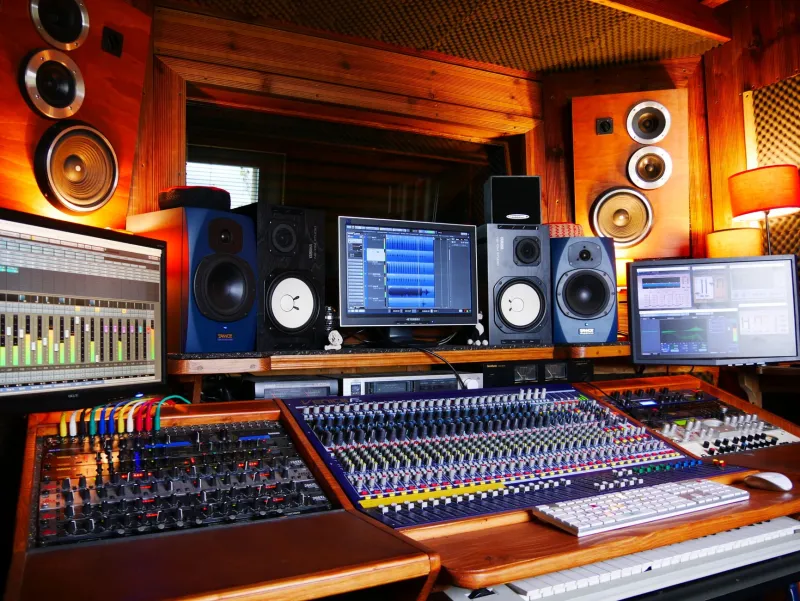
Control rooms are built for monitoring, not for mimicking a living room. A calibrated monitor and a quiet room make uneven loudness feel less severe than it does on a phone speaker at a kitchen table. If your operator is riding levels by ear on a $2,000 monitor, they are not hearing what your audience hears. They are hearing a best-case scenario. Phones compress. TVs apply their own volume leveling. Soundbars exaggerate dialog and explode explosions. The encode has to survive all three.
Loudness is a target, not a vibe
Loudness normalization is the practice of hitting a consistent perceived level across programs, ads, and interstitials. In the US broadcast world, the CALM Act pushed commercials toward measured loudness limits, and the industry settled on standards like -24 LKFS for many broadcast paths. Streaming is less unified, but common web targets land around -16 to -14 LUFS integrated for general video, with true peak ceilings around -1 dBTP. The exact number matters less than consistency. Pick a target, document it, and make every source hit it before the encoder sees it.
That last part is where pipelines get sloppy. If live sources arrive at different levels and the encoder just passes them through, the ABR ladder will faithfully reproduce the inconsistency at every bitrate. A loud promo will still be loud at 400 kbps. A quiet interview will still be quiet. Viewers do not grade on a curve.
Peaks are where good intentions clip
Integrated loudness is the average-ish experience. True peak is the moment your audio runs out of headroom. A stream can measure fine in LUFS and still clip on transients — a slammed door, a cymbal, a sponsor sting. Once clipping happens before encoding, no codec can put the waveform back together. Use a true-peak limiter ahead of the encoder, leave at least 1 dB of ceiling, and stop treating normalization as a post-encode cleanup task. For live, that means a real-time loudness meter and a limiter in the chain. For VOD, it means a measured pass, not a batch preset.
Codecs care about audio too
Audio codecs are not neutral observers. AAC-LC is still the default in many HLS workflows, Opus is common in WebRTC and some low-latency paths, and Dolby formats bring their own metadata and dialnorm behavior. HE-AAC can save bandwidth at low rates, but it can also smear transient detail if you push it too hard. If you are running a ladder with multiple audio renditions, check that the loudness target survives each one. A 64 kbps stereo rendition and a 128 kbps rendition should not sound like two different networks.
Live and VOD need different guardrails
Live audio is a race. You need meters, limiters, and a way to catch a source that goes off the rails mid-show. VOD audio is a measurement problem. You can analyze the whole file, fix the outliers, and verify the result before publishing. Treating them the same is how you get a live stream that sounds fine until the first remote feed, and a VOD library where one title is 8 LU quieter than the rest.
The device is part of the encode
Phones have tiny speakers and aggressive processing. TVs have volume leveling that can flatten dynamics. Soundbars have center-channel dialog boost. None of that is your fault, but all of it is your problem. Test a sample on a phone, a TV, and a laptop. Not to chase perfection, but to catch the obvious failures: dialog that disappears under music, ads that blast, quiet scenes that force viewers to crank the volume. If they have to adjust the volume more than once, you have an audio bug.
Audio is retention math
Every mute is a small exit signal. Every volume adjustment is a moment of friction. Fixing loudness is not glamorous, and it will not show up in a resolution chart. But it is cheaper than replacing viewers who left because your stream sounded like a commercial break. Start with a target, a meter, a limiter, and a device test. That is not a big capital project. It is basic hygiene — and it pays for itself in watch time.