Break It on a Tuesday: Running Chaos Tests on Your Encoding Stack Before Game Day Does
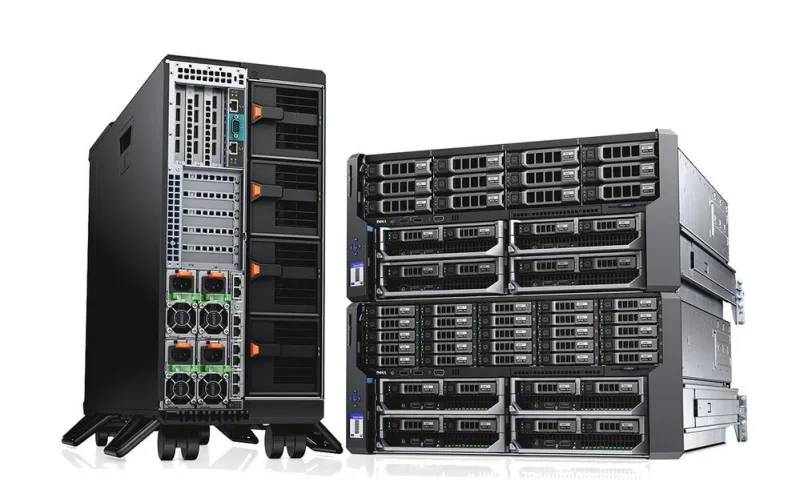
Photo: server room stress testing engineer monitoring screens night, via media.geeksforgeeks.org
There's a special kind of dread that comes from watching your encoder dashboard during a big event. CPU spikes. The buffer graph starts climbing like it's late for a flight. And somewhere in the back of your mind, a voice says: we really should have tested this.
Here's the thing — you can. Most teams treat their encoding infrastructure like a bridge they drive over every day but never inspect. It holds, so it must be fine. Until the one day a thousand extra cars show up at once and somebody's car ends up in the river.
The fix isn't more monitoring. It's scheduled destruction. Deliberately breaking your pipeline on your timeline, with a rollback plan and a coffee in hand, instead of finding out during the biggest stream of your quarter.
Why Your Pipeline Behaves Differently When It Matters
Encoding infrastructure fails weird under load. A stack that hums along streaming a weekly webinar can fall apart the moment three things happen at once: a traffic spike, a degraded upstream feed, and a failover event. Individually, you've probably survived each one. Together, they interact in ways no one documented.
The problem is that most teams only ever test in production, during real events, when failure is expensive. Chaos testing flips that. You pick the worst-case scenarios, run them deliberately, and write down what breaks.
The Three Scenarios That Actually Matter
1. The Synthetic Traffic Spike
Spin up load testers that simulate viewers joining your ABR ladder — not just hitting your CDN edge, but actually pulling segments across all renditions. The goal is to see where your origin and packer infrastructure saturates.
What you're looking for:
- Segment fetch latency under 10x normal concurrent load
- Whether your encoder queue backs up or sheds load gracefully
- How your manifest generation holds up when thousands of clients request it simultaneously
A lot of teams discover their bottleneck isn't the encoder at all — it's the packaging or manifest layer, which nobody ever load-tested because "it's just text files." Text files served ten thousand times a second are a different animal.
2. The Ugly Source Feed
Feed your pipeline deliberately bad input: a stream with dropped frames, audio drift, a sudden resolution change mid-flight, or a source that goes black for eight seconds. Your encoder should recover or alarm. If it silently produces frozen video with intact manifests, your viewers will see a static image while your dashboards report everything green.
This is the failure mode that generates angry tweets, not support tickets. Test it.
3. The Encoder Failover
Kill your primary encoder mid-stream. Yes, actually kill it. Then measure:
- How long until viewers notice?
- Does your backup pick up at the right keyframe boundary, or do viewers get a corrupt segment?
- Does your CDN cache the broken state, extending the outage?
If your failover takes longer than ten seconds to produce clean output, you don't have failover — you have a hope and a runbook nobody's read since onboarding.
Your Quarterly Chaos Audit Checklist
Block half a day each quarter. Run through this list and log the results somewhere people actually look:
- Baseline capture — Record encoder CPU, memory, output latency, and segment delivery times at normal load.
- Spike test — Simulate 5x and 10x concurrent viewers across all renditions. Document where latency degrades.
- Source abuse test — Inject degraded input: frame drops, resolution switches, silence, black frames. Verify alarms fire and output recovers.
- Failover drill — Terminate the primary encoder. Time recovery. Verify stream continuity and keyframe alignment.
- Dependency check — Take down each supporting service (packager, origin, DRM, captioning) one at a time. Confirm the stream degrades gracefully rather than dying completely.
- Rollback verification — Actually practice rolling back a config change. If your rollback takes longer than your deploy, that's a finding.
- Write it up — Every weakness found gets an owner and a deadline. An audit without follow-through is just expensive theater.
Make It Boring on Purpose
The best outcome of chaos testing isn't a dramatic save — it's that game day feels unremarkable. Your team has already seen the pipeline fall over in a controlled setting. They know the recovery steps because they wrote them, not because they're improvising at 2 a.m. with a producer breathing down their neck.
Break things on a Tuesday. Your Sunday self will thank you.