Your Graphics Operator Is Secretly Your Encoder's Worst Enemy

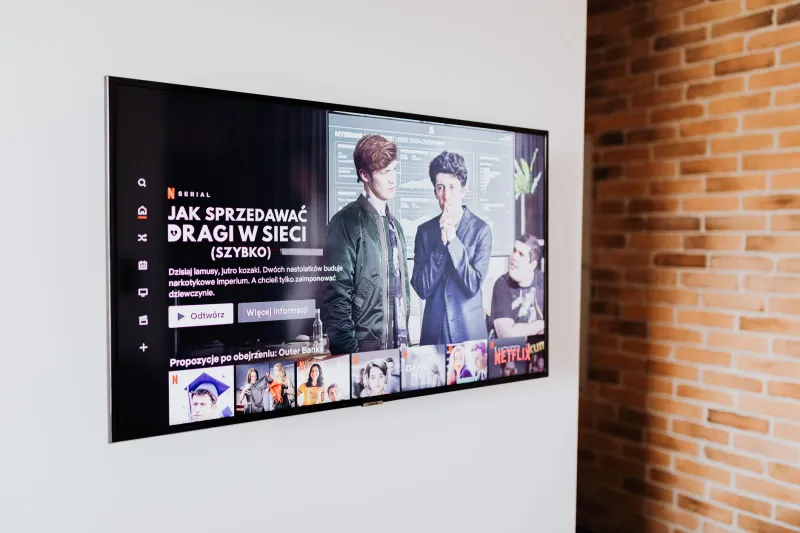
Photo: Sharpezero4, CC BY-SA 4.0, via Wikimedia Commons
Let's get something on the record: the person driving the graphics switcher is making encoding decisions every single time they touch a fader. They just don't know it, and neither does anyone who hired them.
Here's the uncomfortable math. Modern video codecs like H.264 and HEVC spend their bitrate budget on motion. The more pixels change between frames, the more bits you burn to keep the picture clean. A static talking head against a fixed background? Codec dream. A full-width animated ticker scrolling stock quotes across the bottom third while a PiP box bounces in the corner and a semi-transparent lower-third pulses with brand colors? That's not one video — that's the codec's worst nightmare, composited into a single frame.
The Compositing Tax Nobody Budgets For
When you layer graphics over video, you're not just adding content — you're multiplying motion complexity across the entire frame. That scrolling ticker forces the encoder to re-encode a horizontal band of pixels on every single frame. Multiply that band by your frame rate, your ladder depth, and your runtime, and that "harmless" ticker becomes a meaningful chunk of your total bitrate spend.
Worse, transparency is a lie your eyes tell you. A 30%-opacity gradient looks subtle to a human. To an encoder, every pixel underneath it still changes, and the blend itself introduces new pixel values that didn't exist in either source layer. You've created synthetic motion out of thin air.
And here's where it gets expensive: the fix is usually more bitrate, which means more bandwidth, more CDN egress, more encoding compute across every rendition. The graphics team made a creative choice on Tuesday. The encoding budget paid for it every day after.
Two Departments, One Pipeline, Zero Communication
Walk into most production facilities — broadcast or streaming — and you'll find a clean divide. Graphics and production live in one world. Encoding and delivery live in another. The producer briefs the graphics team on look and feel. The encoding team gets handed a finished program feed and told to make it fit 6 Mbps.
Nobody shows the graphics operator the encoder's rate control settings. Nobody shows the encoding engineer the graphics package before air. The pre-flight checklist, if one exists, covers audio levels and caption latency — never "hey, is that lower-third going to eat our motion budget?"
This isn't anyone's fault, exactly. Graphics operators are evaluated on whether the show looks good. Encoding engineers are evaluated on whether the stream stays up. Bitrate waste falls into the gap between the two job descriptions, and it stays there because no one's KPI mentions it.
What a Shared Pre-Flight Actually Looks Like
The fix is unglamorous: a conversation, ideally in writing, before the show. A real graphics-to-encoding pre-flight should cover:
- Ticker speed and coverage. How much of the frame does it occupy, and how fast does it move? Slower and narrower is dramatically cheaper.
- Animation density. Full-frame animated backgrounds and transitions should be flagged as high-motion segments so encoders can be tuned for them.
- Transparency layers. Anything blended over video should be justified. If it's decorative, consider baking it into the background or dropping it.
- PiP placement and motion. A stationary PiP in a corner is manageable. A floating, animated one is a bitrate fire.
- Keyframe and scene-change implications. Frequent full-screen graphics wipes can trigger quality dips mid-stream that viewers notice as momentary softness.
None of this means graphics teams should design for the encoder instead of the audience. It means the encoder team deserves a seat at the production table, and the graphics team deserves to know the cost of their choices in bandwidth terms they can act on.
Own the Opinion
Here's my actual position: broadcast graphics decisions are encoding decisions, full stop. A producer who approves an animated package without asking what it does to the bitrate budget is making a delivery decision. An encoding lead who accepts a graphics-heavy feed without flagging its cost is complicit in the waste.
The organizations that figure this out first will stream better-looking video for less money than their competitors. The rest will keep paying a compositing tax they never voted on — one animated ticker at a time.