ABR Is Eating Your Viewers' Data Plans — And They Might Not Stick Around Because of It
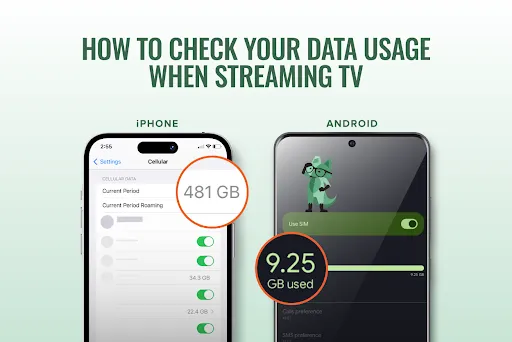
Photo: smartphone streaming video data usage cellular network, via cdn.mintmobile.com
Adaptive bitrate streaming sold us a dream: nobody buffers, everyone gets the best quality their connection can handle, and creators stop losing viewers to the spinning wheel of death. For the most part, it delivered. ABR is genuinely one of the better things to happen to video delivery in the last decade.
But there's a side of the story that doesn't get talked about enough in encoder circles, and it lives in the monthly statements of viewers who watch your content on their phones. ABR, when it's not tuned thoughtfully, has a data consumption problem — and that problem has real consequences for your audience retention, especially in the US where cellular data costs remain stubbornly high compared to other developed nations.
The Mechanics Behind the Overshoot
Here's the core issue. Most ABR implementations — whether you're using HLS, DASH, or something more proprietary — are designed to err on the side of quality. The player buffers ahead aggressively, and when it detects available bandwidth, it reaches for the highest rendition it can sustain. That's great for quality of experience scores. It's less great when a viewer on a 5GB monthly plan is watching your 45-minute cooking show on a lunch break.
The problem gets compounded by what researchers call "bandwidth overestimation." Cellular connections are bursty by nature — a brief moment of strong 5G signal can trick an ABR player into pulling a 1080p segment, only for the connection to drop back to congested LTE a few seconds later. The player has already downloaded that high-bitrate chunk. The data is spent. The quality might have been wasted on a 5.5-inch screen anyway.
Studies looking at real-world mobile video consumption in North America have found that ABR players routinely download 20–40% more data than the actual playback quality would seem to justify. That gap between "what the viewer saw" and "what their carrier billed them for" is where the trust erosion starts.
Cellular vs. Wireline: Two Very Different Viewing Realities
This matters more than ever because the split between wireline and cellular viewing in the US has shifted dramatically. Streaming isn't just a living room activity anymore. According to recent industry data, somewhere between 30–40% of video consumption now happens on mobile devices, with a meaningful chunk of that occurring outside of Wi-Fi coverage.
Wireline viewers — your cable internet subscribers with unlimited or near-unlimited home broadband — barely notice ABR's data overhead. They might consume an extra gigabyte here or there, and it doesn't show up anywhere that affects their relationship with your content.
Cellular viewers are operating under completely different constraints. Prepaid plan users, people in rural areas relying on hotspot tethering, and younger demographics who haven't upgraded to unlimited plans are all watching the data meter. When your stream chews through their allocation faster than expected, the response isn't to upgrade their plan — it's to watch less of your content, or to avoid watching it on the go entirely.
The Engagement Metric You're Probably Not Tracking
Most creators and broadcasters obsess over buffering ratio, average bitrate delivered, and rebuffering events. These are legitimate quality metrics, and you should absolutely track them. But there's a softer signal that's harder to capture: the viewer who just... doesn't come back.
If someone burns through their data watching your stream on a Tuesday and hits their soft cap by Thursday, they're not going to fire up another session on Friday. That shows up as a drop in return viewership, and it's almost impossible to attribute correctly without doing direct audience research. You'll probably blame your content or your promotion schedule before you blame your encoding ladder.
Some platforms are starting to surface "data usage per viewing hour" as a metric, and it's worth paying attention to if yours does. A well-optimized stream should be delivering under 1.5 GB per hour for standard quality on mobile. If you're running closer to 2.5–3 GB per hour on cellular sessions, you have a tuning problem.
Practical Adjustments That Actually Move the Needle
The good news is that you don't have to choose between quality and viewer data costs. You just have to be more deliberate about how your ABR ladder is structured and how your player is configured.
Cap your mobile-specific renditions. If you're serving the same ladder to desktop and mobile viewers, you're probably over-serving mobile. A 1080p rendition at 4–5 Mbps is largely wasted on a phone screen. Consider implementing separate ABR ladders for mobile contexts, topping out at 720p or even a well-encoded 480p for cellular connections. Viewers on 6-inch screens often can't perceive the difference anyway.
Tune your buffer-ahead aggressively for mobile. Most players allow you to configure the initial buffer target and the maximum buffer length. Reducing the maximum forward buffer on cellular connections limits how much high-bitrate content gets pre-fetched speculatively. Yes, this slightly increases rebuffering risk during signal drops — but it's a trade-off worth discussing with your audience rather than making silently.
Communicate with your viewers. This sounds almost too simple, but some of the most viewer-loyal creators in the podcast and streaming space have built goodwill by explicitly telling their audiences about data-friendly viewing options. A simple "watching on cellular? Try our 480p option" in your show notes costs nothing and signals that you're thinking about their experience holistically.
Consider per-title encoding. If your content varies significantly — a talking-head interview compresses very differently than a fast-action sports highlight — per-title encoding can dramatically reduce average bitrate without sacrificing perceived quality. This is the single highest-leverage technical change most mid-size operations can make.
The Bigger Picture
ABR isn't going anywhere, and it shouldn't. It's still the best tool we have for delivering consistent quality across wildly varied connection conditions. But treating it as a "set it and forget it" solution ignores the real cost structure it creates for a significant portion of your audience.
The creators and broadcasters who are going to win the next few years of streaming aren't just the ones with the best content — they're the ones who understand that a viewer's data plan is part of the user experience. Encoding thoughtfully for cellular consumption isn't a technical nicety. It's a retention strategy.